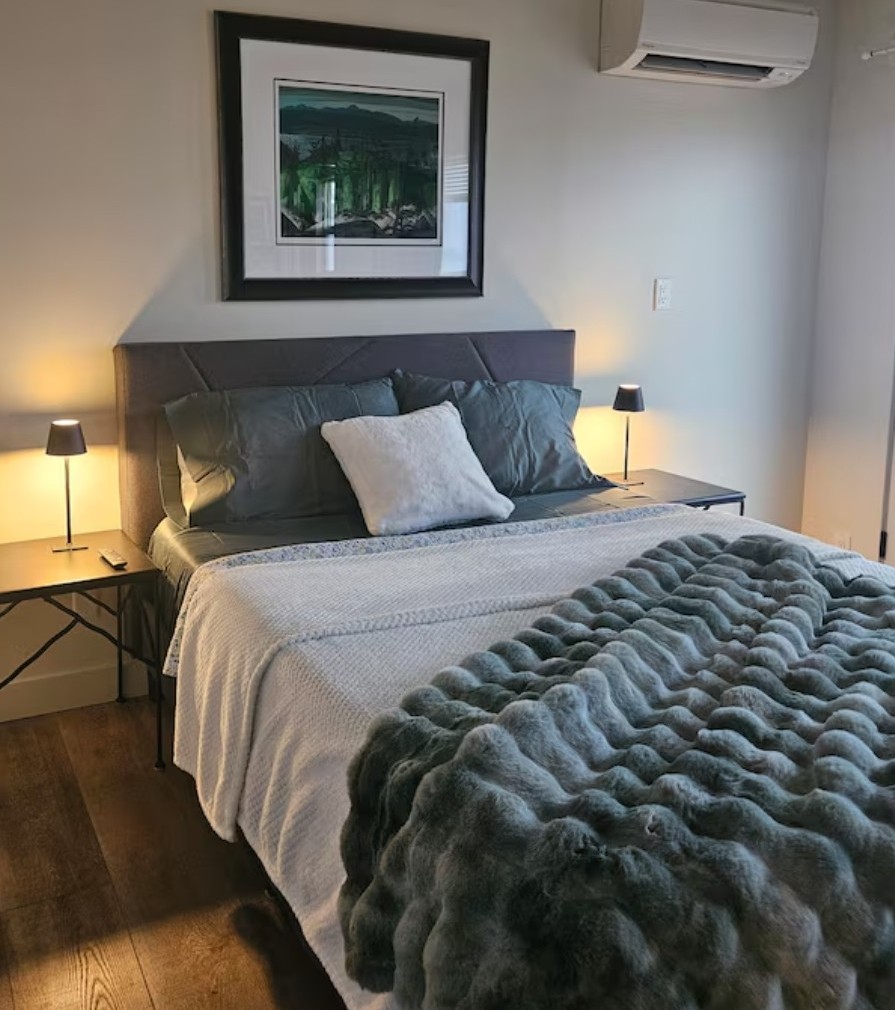
For fifteen years, I did not make my own bed.
This is not because I’m a slob. It’s because I was married to Stephane, and Stephane was a man who, I’m fairly sure, ironed his underwear. He was from Montreal, a touch metrosexual, and constitutionally incapable of leaving a surface rumpled. Everything in his orbit was neat, tucked, and squared away.
Now, I used to have a gift of my own. One of my exes called it “bed art” - I’d make the bed in layers, each one folded down just so, so you could see the edge of every sheet and blanket, pillows placed with the precision of a woman who clearly had too much time and not enough hobbies. It was magnificent. It was ridiculous. I was proud of it.
But you cannot out-tidy a man from Montreal. Stephane was simply better at it, so somewhere in year two I quietly laid down my tools and let him take over the bed. For a decade and a half, the bed art was his department.
Here’s the confession: now that I live alone, I have nearly lost the ability to make a bed at all. Some mornings I pull the covers up like a responsible adult. And some mornings I leave them in a heroic crumple in the middle of the mattress, shut the bedroom door, and quietly pray that no company drops by.
I was thinking about all of this - about rumpled beds and the strange relief of a closed door - while standing in my garden last week, looking at the wreckage of October.
Because every fall, my garden and I have the same argument.
The tomato vines have collapsed into a brown, dramatic heap, like they’ve fainted. The squash leaves have gone to lace. There’s a zucchini I somehow missed in August that is now the size of a small dog and could legally be classified as furniture. And every cell in my body wants to do something. Rip it all out. Tidy it up. Make it stop looking like a crime scene.
This is, it turns out, exactly the wrong instinct.
Because putting a garden to bed isn’t about cleaning up. It’s about tucking in. And those are very different jobs.
Here’s what I’ve learned, usually the hard way:
Leave the mess (mostly). That tangle of dead stems and spent flower heads isn’t ugly - it’s a hotel. Ladybugs, native bees, and all the good bugs that will fight your pest battles next year are checking in for the winter. Hollow stalks, leaf litter, a scruffy corner left wild: that’s not laziness, that’s habitat. The tidiest gardens are often the emptiest ones come spring.
Feed the soil before it sleeps. Fall is when the real work happens underground. Pile on the compost, the shredded leaves, the aged manure if you’ve got it, and let the worms and the rain do the mixing all winter. You’re not fertilizing a garden. You’re setting a slow table for the millions of creatures who’ll build next year’s dirt while you’re inside in your slippers.
Pull the trouble, keep the rest. The things carrying disease - the blighted tomatoes, the mildewed squash vines - those go. Everything else can stay and break down where it fell. Nature has never once raked a forest, and the forest seems to be doing fine.
Plant something for future you. Garlic goes in now, in the cold, and comes up in spring like a promise you forgot you made. Tuck it under some mulch, and next July you’ll want to kiss October-you on the mouth.
And then - this is the hard part - you stop.
You let it rest. You let it look a little dead. You resist the urge to control every last corner, because the garden is about to do the one thing most of us are terrible at: it’s going to stop performing, drop everything it was carrying, and trust that rest isn’t the same as quitting.
I think that’s the part I actually come out here for. Not the chores. The reminder.
Because I’m not great at resting either. I’d rather rip it all out and tidy it up and do something. But every fall the garden sits me down and tells me the same thing it tells the willow and the worm and the sleeping garlic: the rest is not the end of the work. The rest is the work.
So this year I’m putting my garden to bed, and then - radically - I’m going inside. There’s a furniture-sized zucchini I’m leaving as a monument to my hubris, a cup of coffee I intend to finish while it’s still warm, and a long grey winter ahead that, for once, I’m going to let be quiet.
No layers. No folded edges. No bed art.
Just a garden, and a woman, finally learning to leave the covers in a crumple and close the door.
Goodnight, garden. You did good. Rest now.
We both will.